
Daikin Applied Service recently attended the AUE Conference 2026 at the University of Leeds, joining university estates and engineering professionals for two days of industry discussion, knowledge sharing and networking.
The event provided a valuable opportunity for our team to meet with delegates and discuss some of the key challenges facing university estates today, including energy efficiency, decarbonisation, HVAC reliability and the long-term management of existing building services.
Moving from Reactive to Predictive Maintenance
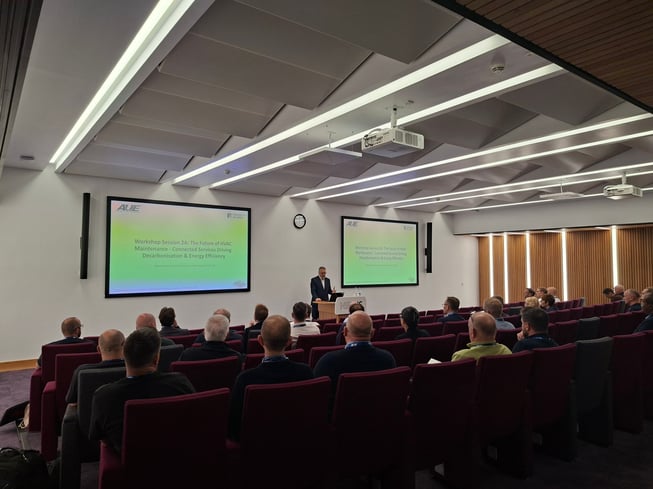
Traditional HVAC maintenance can often be reactive, with problems only becoming apparent once performance has deteriorated or a fault has occurred.
Connected services provide a different approach.
Through continuous monitoring, live operational data and remote diagnostics, facilities teams and service engineers can gain greater visibility of how HVAC equipment is performing and identify potential problems earlier.
During the presentation, Mark explored how Daikin on Site (DoS) provides cloud-based remote monitoring for chillers, heat pumps and AHUs, capturing real-time operational data and providing visibility of energy use, loads, operating conditions and trends.
This insight can support earlier intervention, faster diagnosis and more targeted maintenance visits, helping to reduce unexpected downtime while improving the reliability and efficiency of HVAC equipment.
Turning HVAC Data into Action
Collecting data is only valuable when it can be turned into meaningful action.
The presentation highlighted how connected services can help identify opportunities to optimise setpoints, schedules, equipment staging and part-load performance.
By monitoring performance over time, organisations can build a clearer picture of where energy is being consumed and identify inefficiencies that may otherwise go unnoticed.
Predictive maintenance can also use sensor data to detect early indications of potential problems, including thermistor faults and refrigerant leaks, before they develop into more significant failures.
One example presented demonstrated how Daikin on Site detected a refrigerant leak while a chiller was still operating normally. The issue was identified, repaired and the system refilled within four days, with no production downtime.
Optimising the Entire Plantroom
The presentation also introduced iPlant Manager, Daikin's plantroom optimisation solution designed to work with Daikin chillers and heat pumps as well as equipment from other manufacturers.
Using AI and machine learning, iPlant Manager can support overall plant control and optimisation based on actual equipment performance and building requirements.
Real-time monitoring, early fault detection and performance reporting help transform plantroom data into actionable information, supporting better operational decisions and improved efficiency over time.
Building the Business Case for Decarbonisation
Connected services can also help organisations understand when optimisation and maintenance are enough – and when investment in existing or new equipment should be considered.
Using performance data collected through Daikin on Site, Chiller Plant Performance Analysis (CPPA) can compare existing plant performance against potential improvements such as controls optimisation, variable frequency drives, free cooling, heat recovery, heat pump conversion or equipment replacement.
The analysis can then assess potential energy and CO₂ reductions alongside lifecycle costs, ROI, IRR and payback periods.
This creates an evidence-led approach where organisations can focus first on improving the performance of their existing assets and consider capital investment where the data supports it.
Supporting More Efficient, Resilient Estates
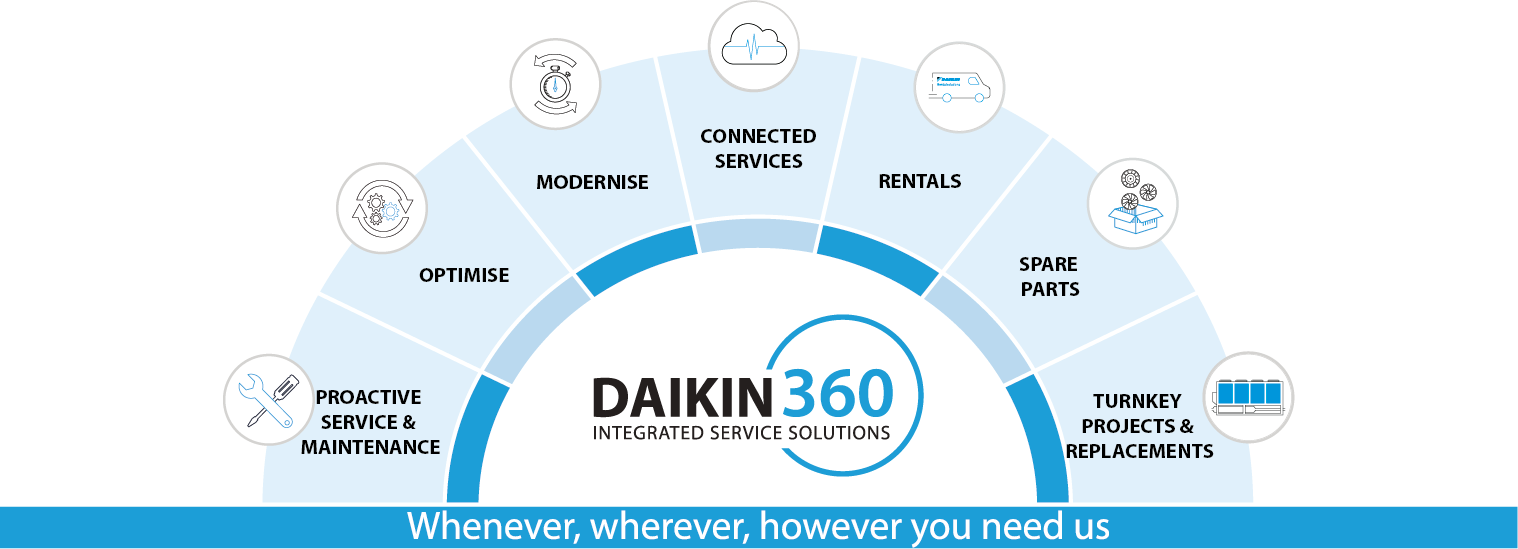
The key message from the session was simple: better visibility enables better decisions.
Connected HVAC services can provide earlier warning of developing issues, support faster interventions and create auditable evidence of energy and carbon savings. They can also help extend equipment life, reduce unnecessary site visits and support wider estate decarbonisation strategies.
By moving from reactive maintenance towards proactive and predictive service, organisations can take a more informed approach to managing HVAC assets while balancing energy efficiency, reliability, cost and long-term investment.